
What Is a Cubic Meter? Meaning, Conversions, and Examples
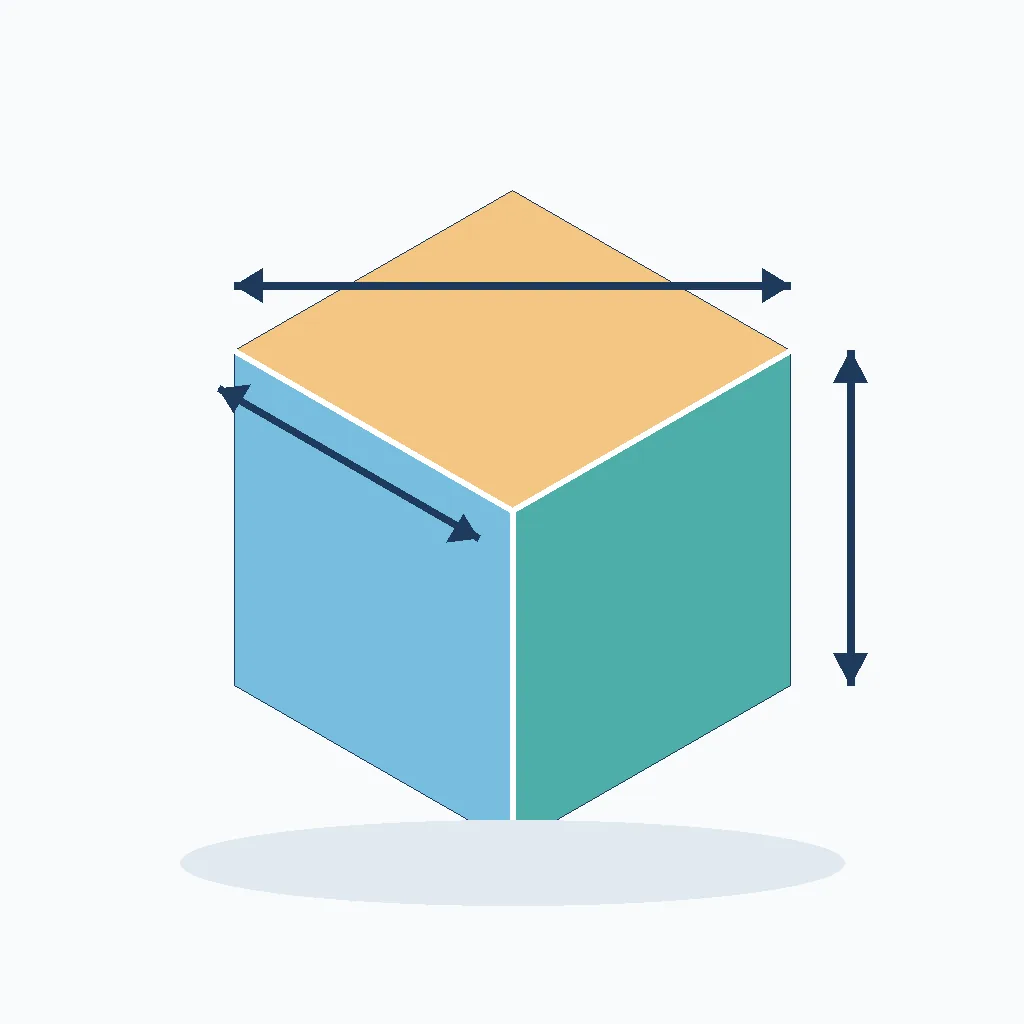
A cubic meter is a unit of volume equal to a cube that is 1 meter long, 1 meter wide, and 1 meter high. It is written as m³. One cubic meter equals 1,000 liters, so the unit is common when discussing concrete, soil, gravel, water, storage capacity, and other materials.
The phrase “cubic meter” describes space, not weight. One cubic meter of water, dry sand, wet soil, and timber can all have different masses. This guide explains the meaning of a cubic meter, the most useful conversions, the volume formula, practical examples, and the checks to make before ordering material.
The short answer: 1 m³ is 1,000 liters
A cube measuring 1 m × 1 m × 1 m has a volume of 1 m³. To calculate a rectangular space, convert every dimension to meters and multiply length × width × height. For example, 3 m × 2.5 m × 0.2 m equals 1.5 m³.
What does cubic meter mean?
A cubic meter, sometimes written as cubic metre, is the SI unit for volume. The superscript 3 means that a meter is used in three directions: length, width, and height. The unit is therefore different from a square meter, which measures only a flat area. A 4 m² floor does not tell you the volume until its thickness or height is known.
In construction and landscaping, people may say “two cubic meters of concrete” or “five cubic meters of soil.” These statements describe how much three-dimensional space the material occupies. They do not, by themselves, tell you the number of kilograms or the number of truck loads. The material density, moisture, packing, and supplier’s measurement convention may all affect those details.
You may also see the terms m³, cubic metre, cubic meter, or “cube” used in English documentation. They represent the same SI volume unit. Keep the symbol m³ in technical notes and use the full phrase when explaining the measurement to someone who may confuse volume with area.
How large is 1 m³? Useful conversions
The most important relationship is 1 m³ = 1,000 L. Since 1 liter equals 1,000 cm³, one cubic meter also equals 1,000,000 cm³. These are exact unit relationships, not estimates. The physical size of a container or pile may look different because its shape can include empty spaces, walls, or uneven surfaces.
| Unit | Equivalent to 1 m³ | How to convert to m³ |
|---|---|---|
| Liter (L) | 1,000 L | Divide liters by 1,000 |
| Cubic centimeter (cm³) | 1,000,000 cm³ | Divide cm³ by 1,000,000 |
| Cubic millimeter (mm³) | 1,000,000,000 mm³ | Divide mm³ by 1,000,000,000 |
| Cubic decimeter (dm³) | 1,000 dm³ | Divide dm³ by 1,000 |
For example, 2,500 L is 2.5 m³, while 350 L is 0.35 m³. A box with 72,000 cm³ has a volume of 0.072 m³. The safest approach is to write the unit next to every number instead of moving a decimal point from memory.
How to calculate cubic meters
For a rectangular room, slab, trench, box, or material section, use volume (m³) = length (m) × width (m) × height (m). If you know floor area and thickness, use volume = area (m²) × thickness (m). The formulas are equivalent when the shape is a rectangular prism.
Example formula
4 m × 1.5 m × 0.25 m = 1.5 m³
For a 4 m × 1.5 m area with 25 cm thickness, convert 25 cm to 0.25 m first.
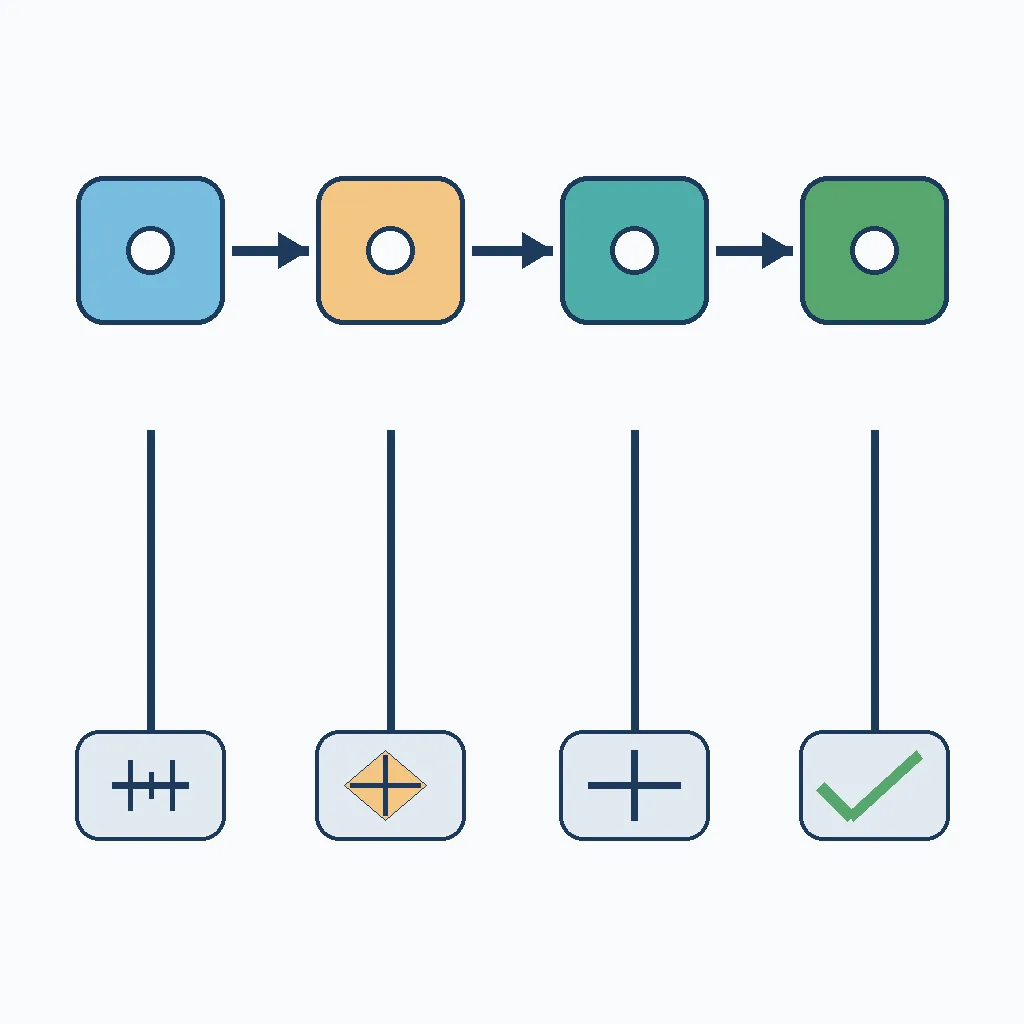
- Define the measured area: decide whether you are using inside dimensions, outside dimensions, or a design drawing.
- Convert the units: divide centimeters by 100 and millimeters by 1,000 to get meters.
- Multiply the three dimensions: keep the full intermediate value instead of rounding too early.
- Write m³ beside the result: this prevents a volume result from being mistaken for m² or kilograms.
- Check the practical use: a design volume and an order quantity may differ because of waste, settlement, or compaction.
When the dimensions are in centimeters or millimeters
Suppose a box is 60 cm × 40 cm × 30 cm. Convert the dimensions to 0.6 m × 0.4 m × 0.3 m, then calculate 0.072 m³. You can also multiply in centimeters to get 72,000 cm³ and divide by 1,000,000. Both routes give the same answer if the units are handled consistently.
A common error is to multiply meters by centimeters, such as 3 m × 250 cm × 20 cm, and then call the result m³. Convert 250 cm to 2.5 m and 20 cm to 0.2 m before multiplying. If a spreadsheet is used, put the original unit in a separate column and show the converted value in the calculation column.
Practical examples: concrete, soil, gravel, and a box
The formula is simple, but the reason for calculating the volume matters. A drawing gives a geometric volume; a supplier may need an order volume that accounts for the material’s behavior and the delivery method.
Example 1: a concrete slab
A slab 6 m long, 3 m wide, and 12 cm thick has a thickness of 0.12 m. The design volume is 6 × 3 × 0.12 = 2.16 m³. Before ordering ready-mix concrete, confirm formwork dimensions, placement conditions, and the supplier’s rounding rule.
Example 2: soil for a garden bed
A bed 4 m long, 1.5 m wide, and 0.25 m deep is 4 × 1.5 × 0.25 = 1.5 m³. Soil may settle after watering and compaction, so the delivered quantity should be discussed with the supplier instead of adding an arbitrary percentage.
Example 3: gravel for a parking area
An area 8 m long, 3 m wide, and 10 cm thick is 8 × 3 × 0.1 = 2.4 m³. Crushed stone can compact, and the bulk volume at delivery may not match the finished layer. State whether the number is loose volume or compacted design volume.
Example 4: a storage box
A box measuring 60 cm × 40 cm × 30 cm has a geometric volume of 0.072 m³, or 72 L. Use inside dimensions for storage capacity and outside dimensions for transport space. Walls, lids, and rounded corners can reduce the usable internal capacity.
For a cylinder, use base area × height. For a triangular section, calculate the triangle’s area first and multiply it by the length. Irregular ground can be divided into several rectangular or triangular sections; calculate each part and add the results. This is often easier to audit than forcing one average dimension onto a shape with large changes in thickness.
A cubic meter is not a weight
To convert cubic meters to kilograms or tonnes, you need the material density. The basic relationship is weight = volume × density. Water has a commonly used reference of about 1,000 kg/m³, so 1 m³ of water is approximately 1,000 kg. Dry sand, wet soil, gravel, wood, and concrete have different densities.
To convert weight back to volume, use volume = weight ÷ density. Treat a published density as an estimate unless it matches the actual material condition. Grain size, moisture, air gaps, and compaction can all change the value. For standards and SI definitions, see the BIPM SI Brochure.
When to use a cubic-meter calculator
For one quick calculation, the formula above is enough. A calculator is useful when you need to repeat the same operation for several rooms, slabs, trenches, or material sections. It helps keep the three inputs visible and reduces the chance of multiplying a centimeter value as if it were meters.
Our cubic-meter calculator accepts length, width, and height in meters and returns the volume. Compare the result with the formula in this guide, then confirm whether the number is a geometric estimate or the quantity to order. A calculator cannot decide how much settlement, waste, or compaction allowance your project needs.
Calculate volume from dimensions
Enter length, width, and height in meters to check the cubic-meter result.
Open the cubic-meter calculatorCubic-meter FAQ
What is a cubic meter?
A cubic meter is the volume of a cube measuring 1 m × 1 m × 1 m. It is written as m³ and equals 1,000 liters.
How many liters are in 1 m³?
There are exactly 1,000 liters in 1 m³. To convert liters to cubic meters, divide the number of liters by 1,000.
How do I calculate cubic meters?
For a rectangular shape, convert length, width, and height to meters, then multiply them. For other shapes, calculate the relevant base area first and multiply by the height or length.
Is a cubic meter the same as a square meter?
No. A square meter measures a flat area, while a cubic meter includes a third dimension and measures volume. Area alone cannot determine volume without a thickness or height.
How much does 1 m³ weigh?
It depends on the material and its density. One cubic meter of water is approximately 1,000 kg, but soil, sand, gravel, and wood can be substantially different.
Should I add an allowance to the calculated volume?
Maybe, but the allowance depends on the material and the project. Confirm settlement, compaction, waste, delivery increments, and the supplier’s convention instead of applying one percentage to every job.
Summary
A cubic meter is a cubic meter of space: 1 m × 1 m × 1 m, or 1,000 liters. For a rectangular shape, convert the dimensions to meters and multiply length × width × height. Convert centimeters and millimeters before multiplying so that the final unit is m³.
Concrete, soil, gravel, and boxes may require additional checks because shape, voids, settlement, and compaction affect the practical quantity. A cubic meter is volume, not weight; converting it to kilograms requires a suitable density. Use the formula or the cubic-meter calculator to verify the geometry, then confirm ordering details with the relevant supplier or site professional.