
Numerology Calculation Method: How to Calculate Life Path and Destiny Numbers
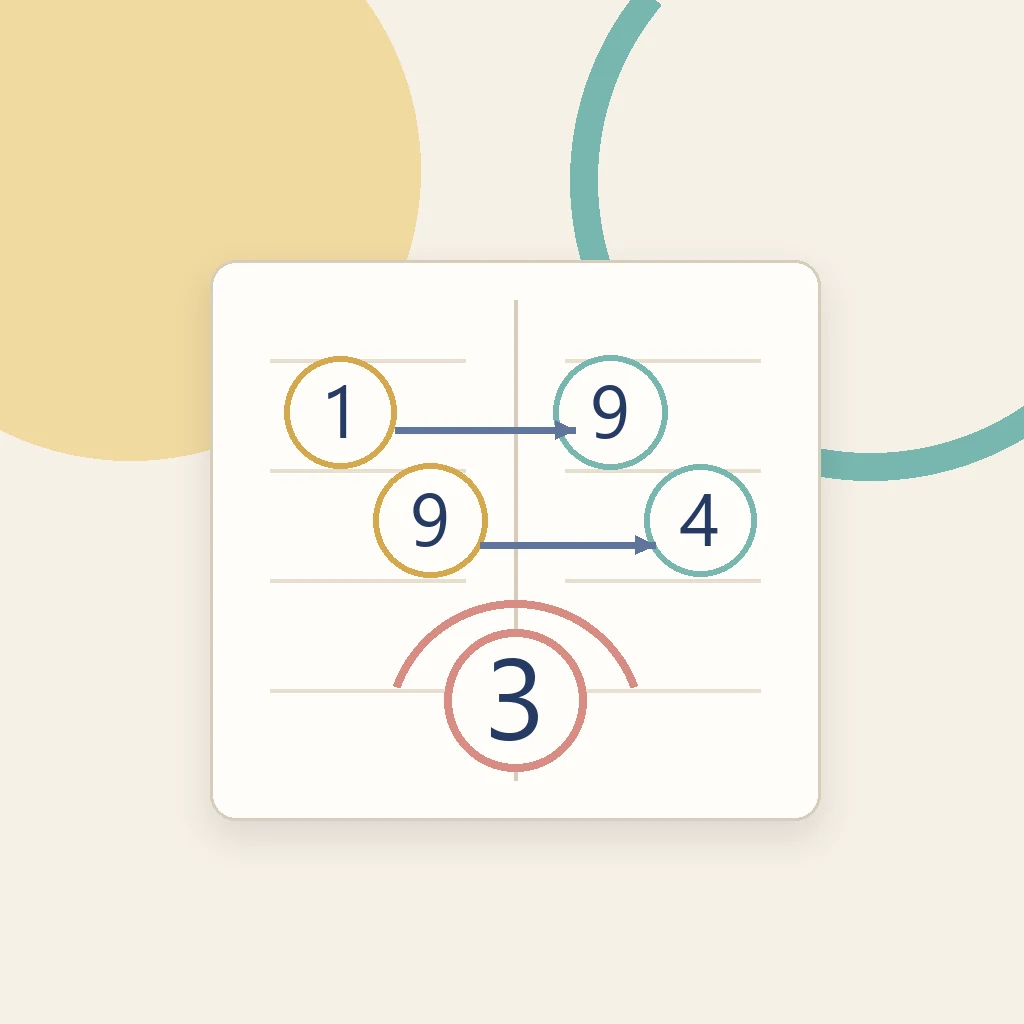
A practical numerology calculation method starts with the numbers in a birth date. Separate the year, month, and day, add the digits consistently, and reduce the total according to the chosen school. This guide covers the life path number, birth number, destiny number, and master numbers 11, 22, and 33.
Systems differ: some reduce every total to one digit, while others preserve 11, 22, or 33. Record the input, formula, reduction rule, and result so another person can reproduce the calculation.
The short answer: add the birth-date digits, then check the reduction rule
For a life path calculation, add every digit in the birth date. For August 17, 1994, the working is 1 + 9 + 9 + 4 + 8 + 1 + 7 = 39, then 3 + 9 = 12, and finally 1 + 2 = 3. If a method preserves master numbers, stop when an intermediate total is 11, 22, or 33 and record both the master number and its reduced counterpart.
What the main numerology numbers mean
The life path number is usually the starting point because it uses the entire birth date. It is commonly read as a broad life theme rather than a fixed personality label. A birth number uses only the day, so someone born on the 17th may record 17 as an intermediate value and 8 after reduction. A destiny or expression number is usually based on a full name converted into numbers, so it should not be confused with a birth-date result.
Books and websites may use the same label differently. Check the input and formula before comparing results; knowing which data produced the number matters more than the label.
Reduction means repeatedly adding digits: 14 becomes 5, while 28 becomes 10 and then 1. Keep intermediate totals so you can separate arithmetic differences from master-number choices.
How to calculate a life path number
You can calculate the number with paper, a notes app, or a calculator. Use the Gregorian birth date if that is the convention of the method you are following. Do not mix a local calendar year with a Gregorian month and day. If a source uses another calendar, follow that source consistently and name the calendar in your notes.
Basic formula
Life path number = all digits in the birth year + all digits in the birth month + all digits in the birth day.
Reduce totals of 10 or more one digit at a time, unless the method intentionally preserves 11, 22, or 33.
- Write the date clearly: keep the year, month, and day visible before doing any arithmetic.
- Separate the digits: 1994-08-17 becomes 1, 9, 9, 4, 0, 8, 1, 7 if zero is included, or 1, 9, 9, 4, 8, 1, 7 in the common digit-sum approach.
- Add the values: calculate the total once and write it down rather than jumping straight to the final digit.
- Apply the chosen rule: reduce again when needed, or stop at 11, 22, or 33 if that school preserves master numbers.
- Save the working: record the date, formula, intermediate total, final number, and method name.
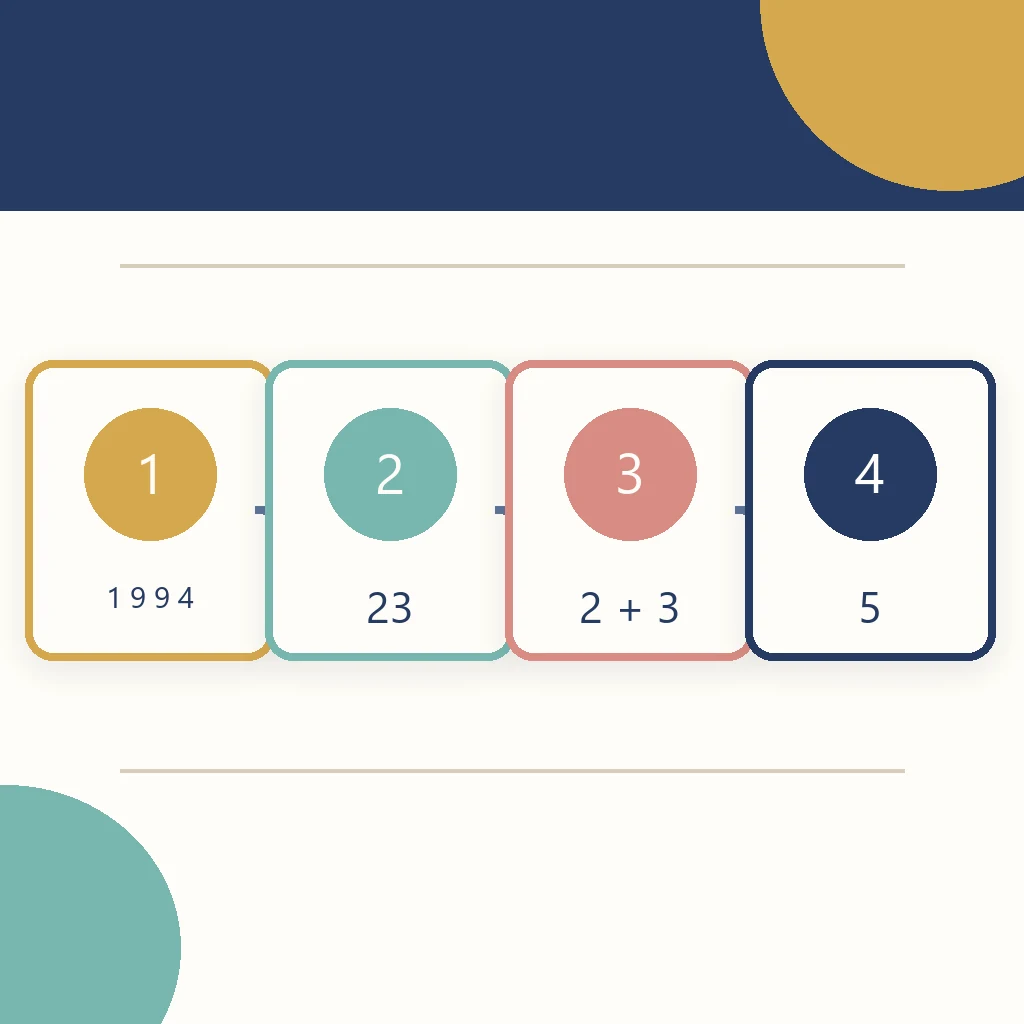
You can add every digit in one line or reduce the year, month, and day separately before combining them. They often converge for ordinary totals, but master-number rules can change the intermediate record. Choose one workflow and keep it consistent.
Birth and destiny numbers: what changes?
The birth number is often calculated from the day alone. The 17th gives 1 + 7 = 8, so it provides a different lens from a life path number of 3 in the worked example below. Some systems read the compound number 17 as well as the reduced 8; others only use the final digit. Both readings should be labeled instead of being blended silently.
Destiny, expression, or name numbers require a letter-to-number chart. The spelling must be fixed before calculation. A legal passport spelling, a commonly used spelling, and a transliterated spelling can produce different inputs. That does not mean a name change automatically changes a person; it means the calculation is based on a different written form.
| Number | Input | Typical focus | What to record |
|---|---|---|---|
| Life path | Full birth date | Broad life themes | Calendar and reduction rule |
| Birth number | Day of birth | Visible qualities or habits | Compound number treatment |
| Destiny / expression | Full name | Expression and role | Spelling and letter chart |
| Personal year | Birth month/day + target year | A one-year cycle | Year boundary convention |
Worked example: August 17, 1994
Here is a complete birth-date example. It demonstrates the arithmetic without claiming that one interpretation is universally correct.
1. Calculate the life path number
1 + 9 + 9 + 4 + 8 + 1 + 7 = 39
3 + 9 = 12
1 + 2 = 3
2. Calculate the birth number
17 → 1 + 7 = 8
3. State the result accurately
Life path: 3. Birth number: 8. The two numbers are not expected to match because they use different inputs.
Reducing 1994 to 23 and then 5 before adding the month and day can still reach 3 here. Keep each step visible, especially when 11, 22, or 33 appears, and state whether master numbers were preserved.
How to handle 11, 22, and 33
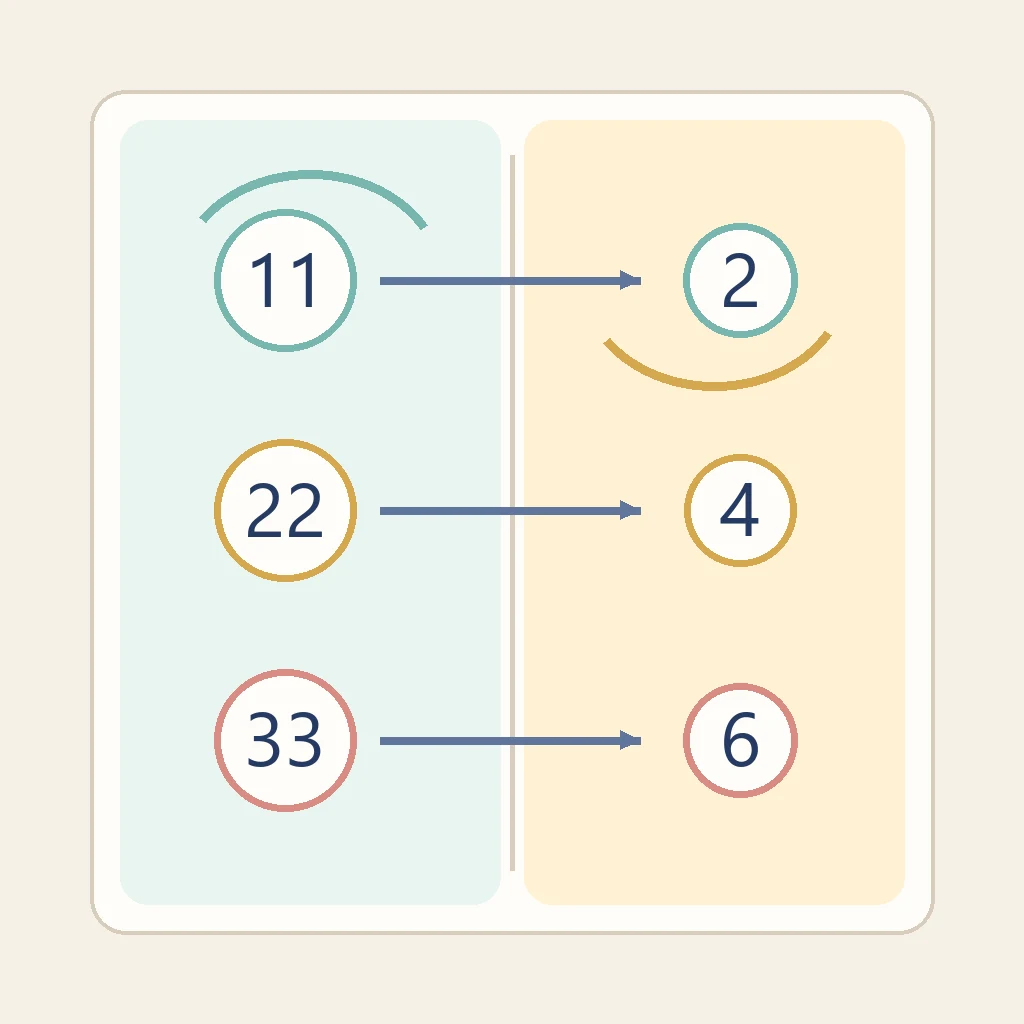
Master-number handling is the most common reason two otherwise careful calculations disagree. In a preserving method, 11, 22, and 33 remain visible and are interpreted as intensified themes. In a reduction-first method, 11 becomes 2, 22 becomes 4, and 33 becomes 6. Neither choice should be presented as a mathematical error when the source clearly states its rule.
| Displayed value | Reduced value | Common reading direction | Balanced caution |
|---|---|---|---|
| 11 | 2 | Intuition, sensitivity, cooperation | Do not confuse sensitivity with certainty |
| 22 | 4 | Planning, structure, practical building | Do not carry every responsibility alone |
| 33 | 6 | Care, teaching, generous support | Do not turn support into self-sacrifice |
Keeping the reduced value in parentheses is often the clearest compromise: 11/2, 22/4, or 33/6. That notation preserves the method used by the source while still showing the underlying digit sum. Read the number as a prompt for reflection, not as a diagnosis or a guarantee about relationships, health, money, or future events.
A checklist for conflicting results
- Did you use the same calendar and date format throughout?
- Did you include the full year, month, and day for the life path calculation?
- Did you decide in advance whether 11, 22, and 33 are preserved?
- Did you separate a birth-date number from a name-based destiny number?
- Did you compare the full formula instead of comparing only the final digit?
- Did you save the intermediate total so another person can reproduce it?
When a result feels unexpected, check the input before changing the interpretation. Recalculate once from the original date and compare the method notes. Numerology may support reflection, but important medical, financial, legal, and relationship decisions need real-world information and qualified advice.
When to use an automatic calculator
Manual calculation is useful when you want to understand the formula or audit a result from another source. An automatic tool is convenient when you want to reduce typing mistakes or check several related numbers at once. The two approaches work well together: calculate one example by hand, then use the numerology calculator to compare the output and confirm that the same reduction rule is being used.
For a particular year, month, or day cycle, use the numerology cycle calculator. If you need to compare traditions and terminology, read the guide to Kabbalah and modern numerology differences. Separate pages about 11 and 33 can then help with interpretation after the arithmetic is clear.
Check your numbers after learning the formula
Enter a birth date in the site calculator and keep the written working beside the result.
Open the numerology calculatorFrequently asked questions
Can numerology be calculated from a birth date alone?
Yes, a common life path calculation uses only the full birth date. A destiny or expression number usually requires a written name, and a personal-year calculation adds a target year. These are separate inputs, so name-based and birth-date numbers should not be merged.
What if my birthday is the 11th, 22nd, or 33rd?
Write the compound number first. A preserving method may read 11, 22, or 33 as a master number; a reduction-first method may continue to 2, 4, or 6. Keep both values in your notes and identify the method used.
Why do different websites show different numbers?
They may use different calendars, reduction points, letter charts, or definitions for terms such as destiny number. Compare the formula and input fields before deciding that a calculation is wrong.
Is one numerology number good or bad?
Numerology interpretations are not a reliable scale of human worth. If you use them for reflection, consider both a number’s constructive theme and the way it can become unbalanced. Your lived context remains more important than a label.
Should I calculate by hand or use a tool?
Use hand calculation to learn the method and an automatic tool to check repeated calculations. Comparing the two is most useful when you confirm that both use the same master-number and date rules.
Summary
The core numerology calculation method is simple: separate the digits in a birth date, add them, and reduce the total according to a stated rule. The life path number uses the whole birth date; the birth number uses the day; a destiny or expression number generally uses the written name; and a personal year describes a shorter cycle.
When results differ, check the calendar, input, formula, reduction order, and treatment of 11, 22, and 33. Preserve the working instead of reporting only a final digit, and use the calculation for reflection without replacing evidence or professional judgment.